
The Formative Years That Shaped a Career
Gene Ebert Myers (February 24, 1944) is an American-born, second-generation, Christian Lebanese American physician.
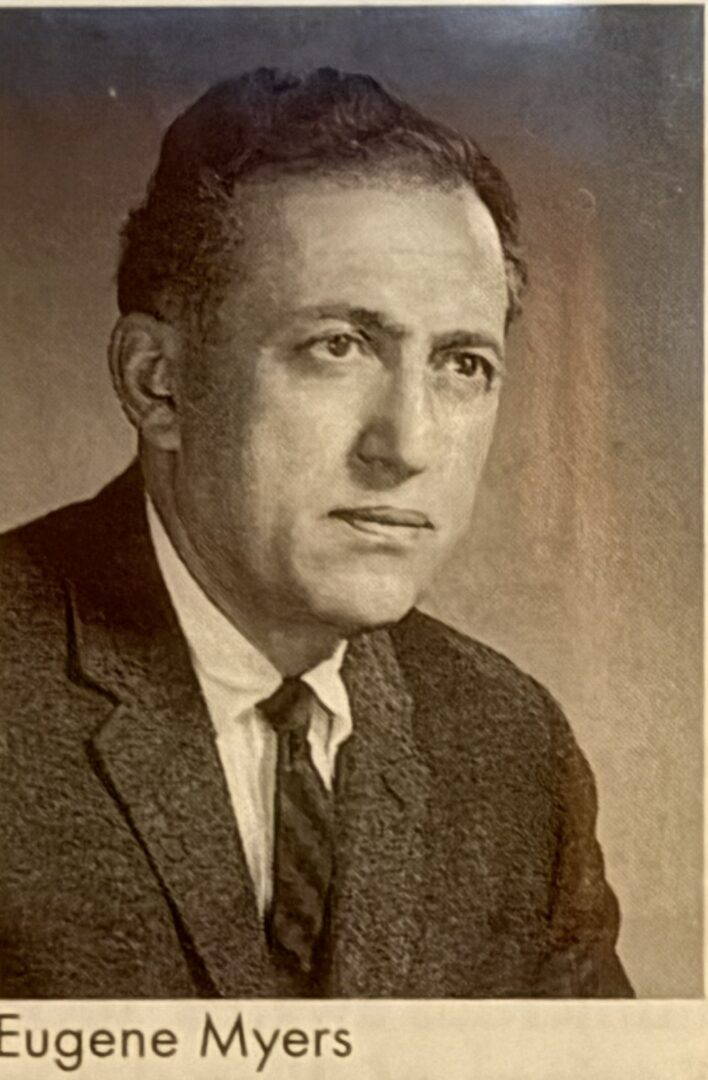
His father, Dr. Eugene A. Myers, PhD (1910-1996), immigrated to the United States from Amouyn, Republic of Lebanon, on a ship by himself at the age of 14 and arrived by way of Staten Island. There they “Americanized” his name from Afif El Munnayer to Eugene Abraham Myers. Dad received his bachelor's, master's, and doctorate degrees in economics from the University of Pittsburgh, with additional studies at Columbia University. From 1940 to 1947, he was with the Civil Service Commission in Washington, DC, where he served as director and senior economist of the Wage Stabilization Division of the War Shipping Panel of the National War Labor Board (NWLB). There, he was awarded the Certificate of Meritorious Service during World War II. From 1947 to 1975, he had the joy of teaching at Penn State University and retired as Professor Emeritus of Economics in 1975, with more than 25 publications.
His 2 most appreciated publications contributing to society are briefly described.
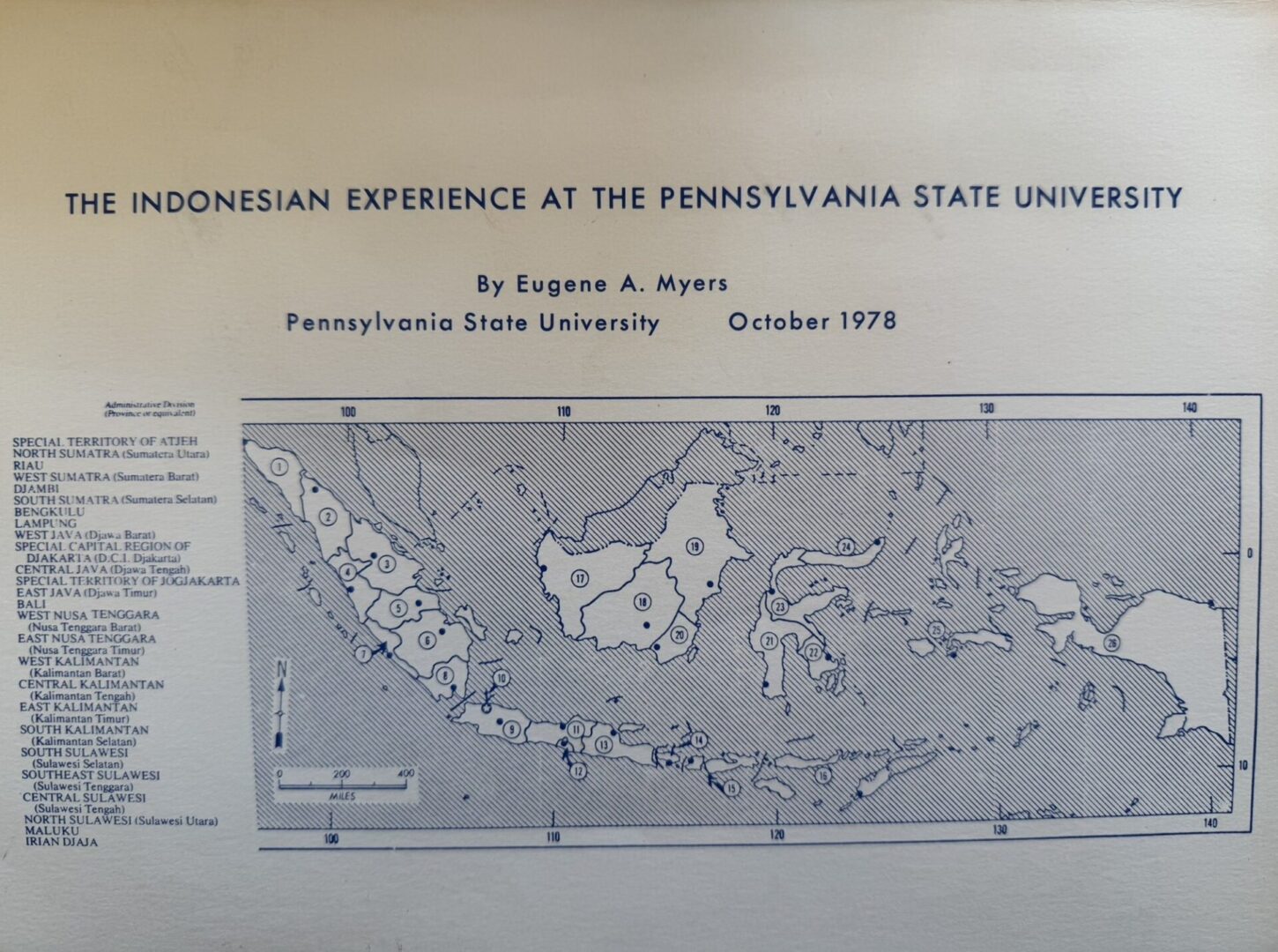
Indonesian Experience
In 1952, at the time when Milton S. Eisenhower was president of PSU (brother to USA president Ike Eisenhower), the Communist Party had already started to have major influence on global unions and the union movement in general. In 1952, THE MUTUAL SECURITY AGENCY of the USA government proposed that PSU develop and implement a program to teach the essentials of the American labor movement. From 1952 to 1957, teams came to PSU from Indonesia, Brazil, Cuba, Mexico, Colombia, and Ecuador. Father Myers headed the group of 100 faculty members who participated in the educational experience. Money was not a motivating factor, for all of these programs and professors were an additional responsibility without compensation from the university.
Young Gene was a constant companion to his dad, like a “sidekick or mascot” to the visitors. He learned many life lessons on these treks.
At about the age of 9 Myers recalls,that one of the Indonesian team members, contracted tuberculosis. Alone at Penn State University with the only family being the Myers family the patient was referred to the Cresson Sanatorium (a Pennsylvania operated major state–run tuberculosis sanatorium (operated from 1913-1964, this was one of the largest (700 beds). LOCATED ON A MOUNTAIN TOP, THIS WAS KNOWN TO BE ONE OF THE FIRST RACIALLY INTEGRATED FACILITY OF ITS KIND. The patient spent nearly 6 months in the facility, which was designed to provide fresh air, nutritious food, and isolation from the community. Each week, father Myers and young son ,Gene made the 60 mile, 1.5 hour drive to the sanatorium. Gene remembers sitting in the car for an hour or so, waiting for his father , while he visited the Indonesian student. Eventually he recovered and returned to complete the course work at Penn State University.
LESSON learned; *From that time on, young Myers thought it was perfectly normal to provide such personal care as part of his Dads teaching profession.
He remembers his dad complaining that the local college barbers at PSU had some “misgivings” about cutting the hair of Afro-Americans and was concerned that the dark-skinned Indonesians would get the same treatment. Therefore, many of the 100 strong faculty members of the group at PSU got together and collected enough money to finance a barber who would cut hair for the going price, regardless of skin color.
The dark-skinned Indonesians found it difficult to rent housing until Senior Myers explained that these visitors were Indonesians and not Afro-Americans; then it was okay!
Arabic Thought and the Western World
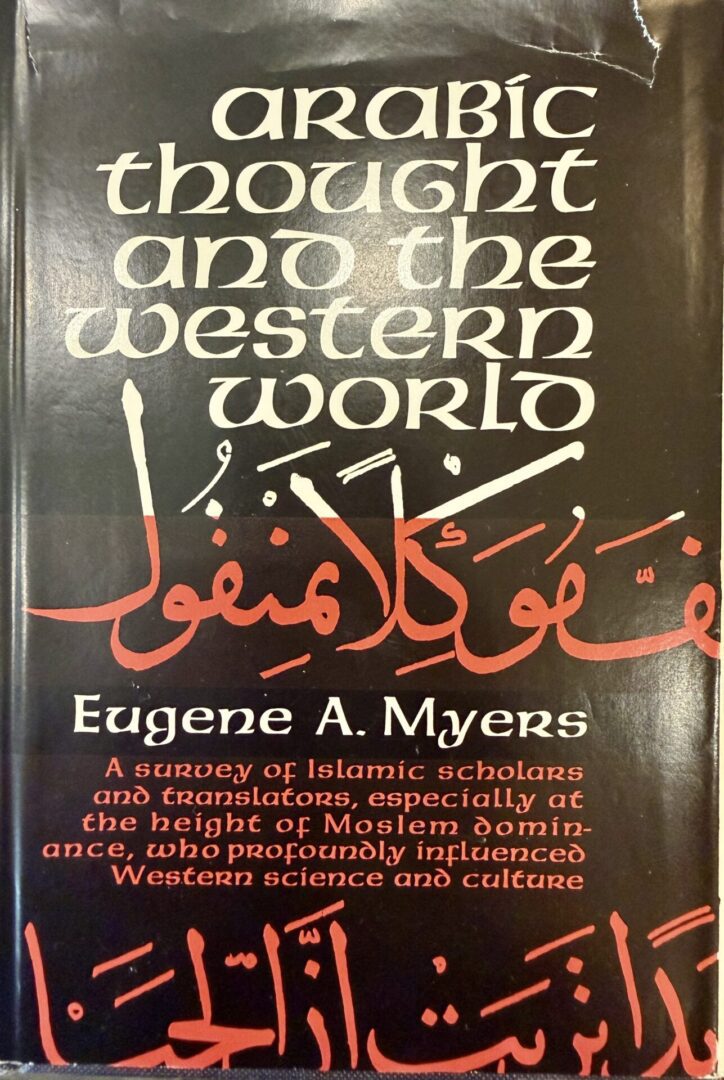
In the Golden Age of Islam, a survey of Islamic scholars and translators, especially at the height of Moslem dominance, who profoundly influenced Western science and culture, was written by Senior Myers in 1964 and published by Frederick Unger CO. New York.
Herein, he laid out a comparison between the Moslem scholar Al Farabi (870–950 AD), credited as the first Moslem scholar who presented philosophy as a coherent system in the Islamic world, and St. Thomas Aquinas (1225–1274 AD), considered one of the Catholic Church's greatest theologians and philosophers in the western tradition.
This Senior Myers detailed comparison is believed to have disclosed, FOR THE FIRST TIME, that St. Thomas Aquinas depended heavily on Al Farabi for his arguments regarding proof of the existence of God and associated “FINITE-MOVER-PRINCIPLES.” Nonetheless, St. Thomas Aquinas should be credited for the translation from Arabic to English.
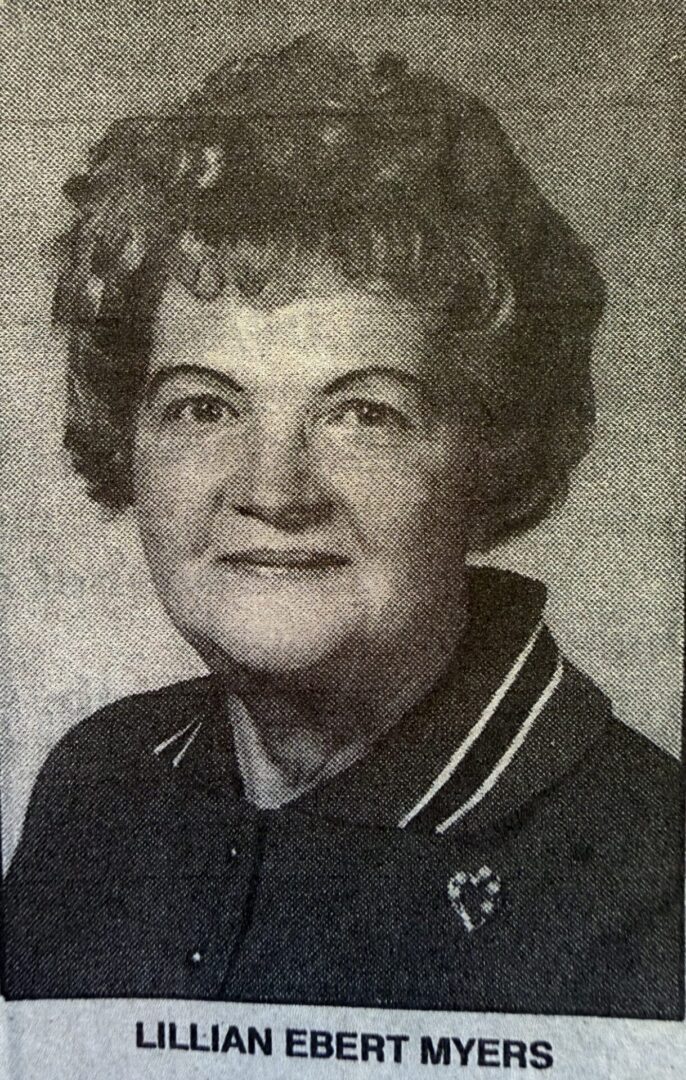
His mother, Lillian Ebert Myers (1911-1992), graduated from Frick Training School in Pittsburgh, Pennsylvania, in 1934 and had her master's of education degree from George Washington University in Washington, DC. According to the US Department of Commerce and Bureau of the Census, performed at that time, there were less than 480,000 women enrolled in higher education in the USA! She truly adored teaching youngsters and taught 3 generations in the State College area school district. She was passionate about Christianity and her Seventh-day Adventist church and added formal religion to our (my sister Marlene/Mimi's) life experiences each Saturday.
From age 3–18, Dr. Myers lived with his parents in State College, Pennsylvania, attending the area public school systems through high school. By all accounts he was a POOR GRADE SCHOOL STUDENT and was EXPELLED FROM GRADE SCHOOL for arguing with the principal that a local gas station sign read “3 SSO versus ESSO.” This infraction, plus his poor academic skills, led the principal to recommend that he be “held back for the upcoming year,” i.e., “FLUNKED.” His father, a union labor leader, experienced negotiator, and arbitrator, came to the rescue, declaring that his son Gene was not intellectually deficient but was “JUST A BOY WHO WAS MENTALLY MATURING SLOWER THAN THE GIRLS.” It could not be disputed that he did appear to most to be a boy, and in the long run, the principal had no choice but to acquiesce. Years later in physics class, he realized that he might have a touch of dyslexia, although he just overcame this by paying more attention to numbers (although the current word dyslexia did not become commonplace until the mid-1960s).
State College was a safe environment at that time, and as an 8-year-old, he usually attended PSU football games with his buddies, without parents. This was accomplished by going to the GAME EARLY with a lunch sack AND DIGGING A HOLE UNDER THE OLD BEAVER STADIUM FENCE and then eating lunch while hiding under the bleachers. The football field caretakers never filled the holes.
Despite having a world-class high school and college English tutor, Mrs. Sue Paterno, it was determined that there was currently no hope for young Gene, and the final conclusion was that English was his second language, but he apparently had no first!
AWAKENING:
While Myers Mother devoted Saturdays to studying the Seventh-day Adventist (SDA) theology in church with the kids Father Myers was not strictly adherent to any religion. He served as a faculty advisor to the PSU Eastern Orthodox Society (Eastern Orthodox Christianity is a major conservative branch of Christianity with over 200 million adherents, best described as a fellowship of self-governing (autocephalous) churches.
Although nearly 90% of all children were "born in to religion" in the 60's father Myers was not strictly adherent to one religion and maintained such an attitude towards the kids.
By his teenage years young Myers understood and practiced SDA doctrine as counseled by his mother. However, as a budding chemistry and physics major, he was having difficulties reconciling the proof of the existence of a higher power.
He vividly recalls eventually posing this querry to his professor Father who had a keen interest in comparative religion, despite being a professor of economics. Since young Myers grew up never being willing to take orders from anyone, including his parents, father Myers was very careful to gracefully and gently introduce him to ancient and past scholars and philosophers including the following;
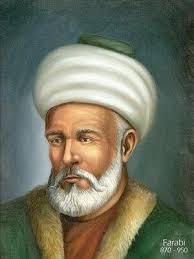 1.) AL FARABI ( 870-951 AD )- This Islamic philosopher had a profound impact on the West, providing a unitary framework in which science and the reason could be reconciled with the revelation and religion.
* AL Farabi proved GOD'S EXISTENCE by identifying God as the " FIRST CAUSE" or "NECESSARY BEING," the essential, non-contingent foundation upon which all other dependent, changing, and contingent beings in the universe rely. *
*The FINITE MOVER PRINCIPLE, rooted in Aristotle's philosophy (384-322 B.C. )
THE "UNMOVED MOVER" OR "FIRST CAUSE" argument asserts that all motion or change requires a cause , and an inifinite chain of moved movers is impossible. Therefore, the chain of causes must terminate in a first, uncaused, and eternal "unmoved mover" (God or PRIME mover) to explain the existence of motion in the universe.*
Merging Neo-Platonism (a 3rd century AD form of mystical idealism based on Plato's teachings.It posits a hierarchical reality emanating from a supreme ineffable source known as "THE ONE" with the ultimate goal being the soul's return to this devine origin through purification,virtue,and philosophical contemplation) with Aristotelian thought.
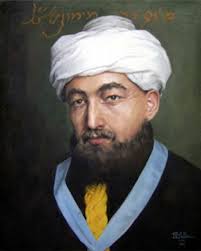 2.) MAIMONIDES (1138 AD–1204/A.D.) ["Moses Ben Maimon" ;Rambam]- This Sephardic Jewish Rabbi, who is widely acknowledged as well one of the most prolific and influential Torah scholars of the middle ages. He was influenced by Aristotle, AL Farabi,and Ibin Sina ( in him Arab science reached its climax; creditied with 99 books on philosophy, medicine, geometry, astronomy, theology, philology and art; most important contribution was probably his book Cannon of Medicine ) and contributed to the Islamic Golden Age and highly regarded in many parts of the Muslim world.
He fundamentally transformed Jewish understanding of the Torah by rationalizing its interpretation, codifying its laws, and defining its core theological principles. Maimonides used a philosophical approach that viewed biblical anthropomorphisms (attributing human characteristics, motivations, or emotions to non-human, inanimate objects or natural phenomenon) as allegories (a story, poem, or picture that can be interpreted to reveal hidden meaning , typically a moral or political onr), emphasizing a non-corporal God.
He formulated the "13 principles of faith".
As a religious scholar and physician/scientist his teachings regarding medicine " MAIMONIDES CORE VIEW " greatly influenced young Myers medical perspective:
1.) LEARN with HUNGER
2.) SEEK with JOY
3.) STRIVE with energy
* BECAUSE WISDOM GROWS WHERE ZEEL LIVES *
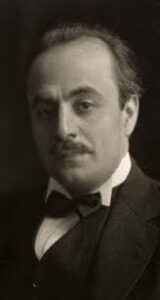 3.) KAHLIL GIBRAN (1883–1931 A.D.) This is a Lebanese Christian American writer, POET, and visual artist.
His 28 Chapter, 96 page book " THE PROPHET " offers common sense 1–2 page vignettes on life, from love, marriage, children to the farewell. Dr. Myers and wife Susanne used some of these chapters to supplement there wedding vows.
Gibran was not strictly adherent to one religion. He was a Maronite Christian by birth, but synthesized all religions into a universal spirituality focused on HUMAN PERFECTION, DIVINE UNITY, and LOVE FOR LIFE. When questioned about his religion he referred to himself as a " L I F E I S T "
He opposed religious dogma, emphasizing personal spiritual experience over specific doctrines. No wonder Senior Father Myers was attracted to his right philosophy.
After a few sessions with father Myers, and studying the reference scholars provided, particularly as referenced in his book, Arabic Thought and the Western World, Myers recalls declaring that "he gets it". The FINITE MOVER PRINCIPLE and the PROOF OF THE EXISTENCE OF GOD, as initially suggested by Aristotle and embellished by AL Farbi and eventually St. Thomas Aquinas was all that he needed to understand the principles his mother had taught him years ago. The principles would be applied daily in all walks of life, and applied to complex medical circumstances.
As a youngster Myers exposure to music was limited to the spiritual verse, avoiding "cheap popular styles" or strong driving rock rhythm that may "negatively affect spirituality".
However, as a teenager, he "broke loose "from those restrictions, and found the 1970s folk–country rock genre, such as Csny's (Crosby, Stills, Nash, Young) song "TEACH YOUR CHILDREN" to his liking. This recording was a plea for better communication, understanding and love between generations. It advised parents to nurture their children with love rather than rigid- fear based rules, while encouraging youth to guide their elders, bridging generational gaps through mutual respect.
VERSE 1 read as follows:
You, who are on the road
Must have a code that you can live by
And so, become yourself
Because the past, is just a goodbye
Teach, your children well
Your father's hell, did slowly go by
And feed, them on your dreams
The one they picks, the one you'll now by
Retrospectively, Myers believes that the unusual difference between the maternal (Christian didactic beliefs–with the main proof of existence of the God being belief) and paternal (Aristotle,AL Farabi "scientific" proof of existence of God & "finite mover plinciple") created the perfect substrate for the young son. The fact that both parents were flexible and encouraged him to choose the Precise Road and Code to Live by made the difference in lifelong success; because now he knew his parents believed in him.
When asked for examples of how he uses the "finite mover principle" in medicine he recalls 2 young individuals who had sudden collapsing spells. Heart monitoring disclosed transient 22 and 25 second episodes of sinoatrial (SA) block, where electrical signals from the SA node (the hearts natural pacemaker) were blocked from reaching the heart pumping chambers. The heart basically stood still, with no blood leaving the heart, resulting in absent blood supply to the brain and thus causing collapse–but what caused failure of the God given pacemaker?? Routine blood testing and imaging studies did not provide an etiology in either case. Both patients received permanent pacemaker implantation without further episodes.
Applying AL Farabi's "finite mover principle", the root " FIRST CAUSE" was interrogated using Myers Y(=why)-DOC persistence. This disclosed that 1 case was of a specific genetic mutational origin, while the other was a combination of an autoimmune etiology and separate specific genetic mutational origin.